Banking Circle 2025: The Payment Bank whose largest Fee line is not payments
Banking Circle 2025: The Payments Bank Whose Largest Fee Line Is Not Payments An EFRI financial-structure analysis based on Banking Circle S.A.’s audited financial
EFRI researches online fraud schemes and the third-party actors that enable or facilitate them, including payment service providers, banks, social media platforms and other intermediaries.
Analysis of fraudulent investment platforms, recovery scams, victim acquisition methods and cross-border fraud structures.
Research on payment flows, payment processors, banks, crypto entities.
Research on Social Media platforms, affiliates, advertising networks and other intermediaries.
A research note on the scale, structure and impact of online broker scam schemes in Europe.
Read here our report.
A report about how a Dutch licensed PI enabled and supported a transnational criminal organization for years. Read here the report.

Banking Circle 2025: The Payments Bank Whose Largest Fee Line Is Not Payments An EFRI financial-structure analysis based on Banking Circle S.A.’s audited financial

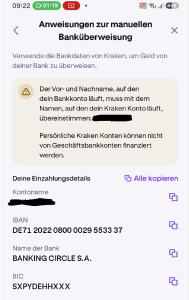
Banking Circle’s vIBAN Model in Practice: Kraken, Bano and the Look-Through Problem EFRI has repeatedly argued that the principal risk of virtual IBAN structures

FINOM/Banking Circle/Triventa: a €314k pass-through at a DNB-licensed EMI A fact-based EFRI Case Note built on the FINOM account statement, Companies House filings, Banking

The OCC’s Rejection of bunq: A Continuing Fit-and-Proper Question for DNB The refusal of bunq’s U.S. banking charter is not simply a failed expansion

Wise Was Denied a Bank Charter. Will DNB License Qivalis? On 21 July 2026, the US Office of the Comptroller of the Currency has

StablR admitted that EURR and USDR were no longer fully backed after unauthorised access to its platform. The incident raises fundamental questions about minting controls, redemption rights, Payvision-linked management and the MFSA’s supervision.

Days before the MiCA transition ended, Malta authorised an OpenPayd company to provide crypto services across Europe. The controlling owner and the warning signs were public. The MFSA’s assessment was not.

Malta’s Financial Arbiter repeatedly found that OpenPayd improperly credited payments through opaque vIBAN structures. He referred the breaches to the regulator—then denied compensation and blamed the victims’ “greed and gross negligence

The Wolfsberg Group’s new guidance on banking services for non-bank payment service providers addresses a structural weakness in the payment system: banks provide the