Asset recovery in Europe remains deeply dysfunctional. From a victim perspective, the system still too often fails at the most basic level: returning frozen money within a reasonable time. At EFRI, we have seen this repeatedly. In the P2P GmbH case, prosecuted in Cologne, approximately €1.8 million was frozen in autumn 2018, yet victims are still waiting to get their money back eight years later. In the Wolf of Sofia case, prosecuted in Vienna, approximately €2.6 million was frozen in January 2019, and victims there are still waiting as well, seven years later.
This is asset recovery in Europe in 2026: money may be frozen, press releases may be issued, and institutions may speak of progress, yet years later victims still do not recover their funds. Against that background, asset recovery in Europe in 2026 is, in many respects, still starting from scratch.
New Frameworks Deserve Attention — But Also Skepticism
This is why the recent European and international developments on asset recovery deserve attention, but also scrutiny. The European Union has adopted a new legal framework, and the FATF has reinforced asset recovery as a policy priority. On paper, this looks like progress. In practice, however, victims do not need more high-level language, more networks, or more glossy reports printed on expensive paper. They need assets to be traced quickly, frozen effectively, managed properly, confiscated where lawful, and returned without waiting eight or nine years. That remains the real test.
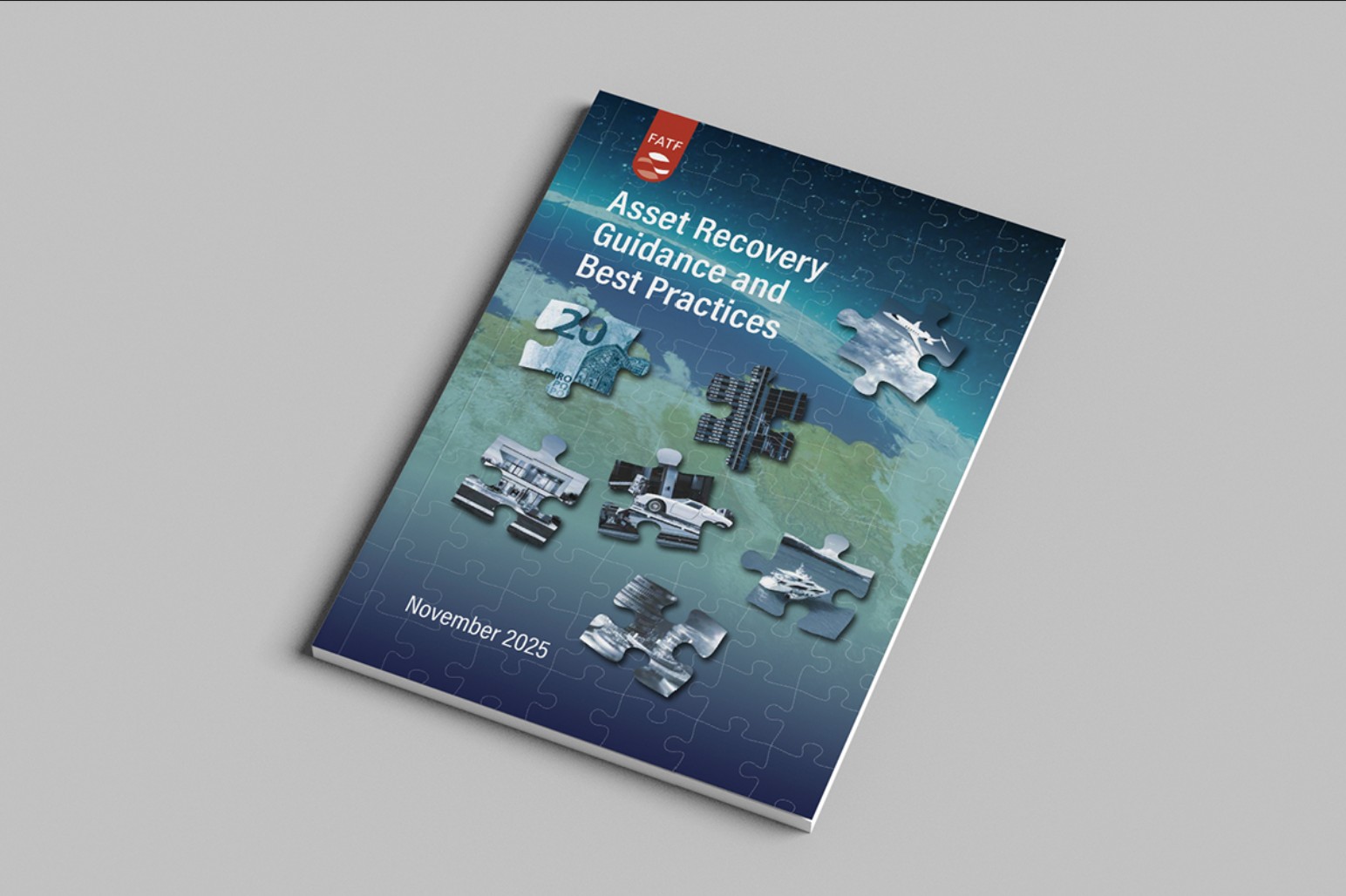
Directive (EU) 2024/1260 is now the central EU instrument in this area, and the FATF published new Asset Recovery Guidance and Best Practices in November 2025.
The EU’s New Directive Is an Important Step
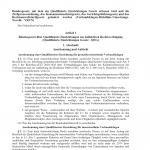
The most important recent EU development is Directive (EU) 2024/1260 on asset recovery and confiscation. It was adopted on 24 April 2024, published in the Official Journal on 2 May 2024, and entered into force on 22 May 2024. The Directive lays down minimum rules on the tracing, identification, freezing, confiscation and management of property in criminal matters across the Union.
But this reform should be understood for what it is: not a fresh start, but an attempt to repair and strengthen a system that has already existed for years and has too often failed victims in practice.
A particularly important point is that national Asset Recovery Offices already existed before this Directive. They are therefore not a new institutional invention of the 2024 reform. Rather, the Directive builds on an existing architecture and seeks to strengthen it by giving Asset Recovery Offices a more central and operational role in the tracing and identification of criminal assets. That point matters because it shows that Europe’s problem has never simply been the absence of offices, terminology, or institutional design. The real question has always been whether those structures are effective in practice.
From a victim perspective, that distinction is crucial. The existence of national Asset Recovery Offices on paper has plainly not been enough to ensure timely restitution. In both the P2P GmbH case in Germany and the Wolf of Sofia case in Austria, we sought support and were effectively referred back to the courts in charge. Tracing and identifying assets is one thing. Freezing them is another. Returning them to victims within a reasonable time is something else again. The Directive acknowledges this indirectly by placing stronger emphasis not only on confiscation, but also on asset management, institutional capacity, and the effective handling of frozen and confiscated property so that value is preserved. In other words, the reform itself reflects an underlying recognition that formal structures alone have not delivered satisfactory outcomes. But implicit recognition does not solve practical problems for victims.
Better Rules Do Not Automatically Mean Better Outcomes
Everything that helps to improve the current situation is welcome. But it should not be romanticised. Europe has never had a shortage of legal texts, institutional language, working groups or strategic concepts. The deficit has been practical delivery. A victim who is still waiting eight years after a freeze order does not need another conference on best practices. A victim who is still waiting nine years after funds were secured does not need another beautifully written policy paper explaining why coordination matters.
The Commission Has Also Created a New Cooperation Network
In February 2026, the European Commission added another layer with Commission Decision (EU) 2026/452, establishing a cooperation network on asset recovery and confiscation. The Decision was adopted on 27 February 2026 and published in the Official Journal shortly thereafter. Its purpose is to support cooperation on asset recovery and confiscation and to help implement the new framework.
That may prove useful. But again, victims do not recover money because another network exists. They recover money only when authorities move early, coordinate effectively, preserve value, and follow cases through to actual distribution. Networks may support results. They are not a substitute for results.
FATF Is Sending the Same Message Internationally
The FATF has been moving in the same direction. In November 2025, it published Asset Recovery Guidance and Best Practices and stated that the revised FATF Recommendations signal that asset recovery must become a policy priority for jurisdictions. The guidance is presented as a practical tool to help policymakers and practitioners intensify efforts to recover criminal assets.
That is important at the level of international standard-setting. But guidance, by itself, does not return a single euro to a single victim. It can support reform; it cannot replace a functioning domestic recovery system. The real question remains whether these reforms will shorten the time between freezing assets and actually returning funds to victims.
The Problem Is Not Paper. It Is Understaffing
The deeper problem is more uncomfortable. In many cases, asset recovery does not fail because Europe lacks concepts, reports or formal frameworks. It fails because prosecutors’ offices, courts and enforcement authorities are often not equipped to handle these cases with the speed and intensity required. Complex cross-border fraud cases demand time, expertise and manpower. Too often, the institutions responsible for delivering justice do not have enough of any of the three.
This is ultimately a question of political priorities. Governments still too often praise the fight against financial crime while underfunding the institutions that must actually carry it out. A properly resourced judiciary is not a secondary budget item. It is one of the foundations of a functioning rule-of-law system. Without serious investment in prosecutors, courts and asset recovery capacity, Europe will continue to produce more rules than results.
Without serious investment in prosecutors, courts and asset recovery capacity, Europe will continue to produce more rules than results, and the result is a serious erosion of victims’ trust in the rule of law.