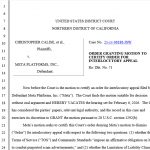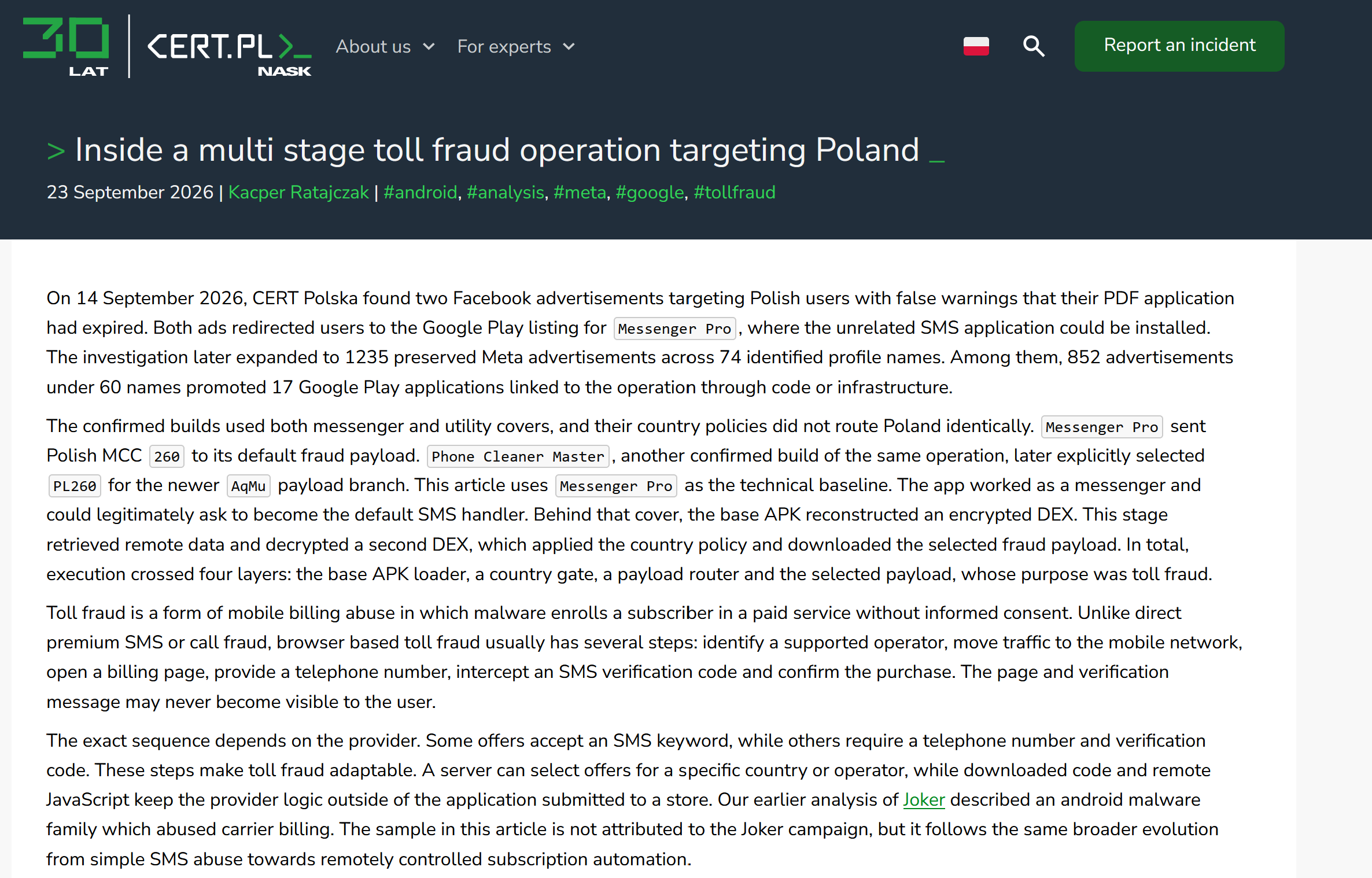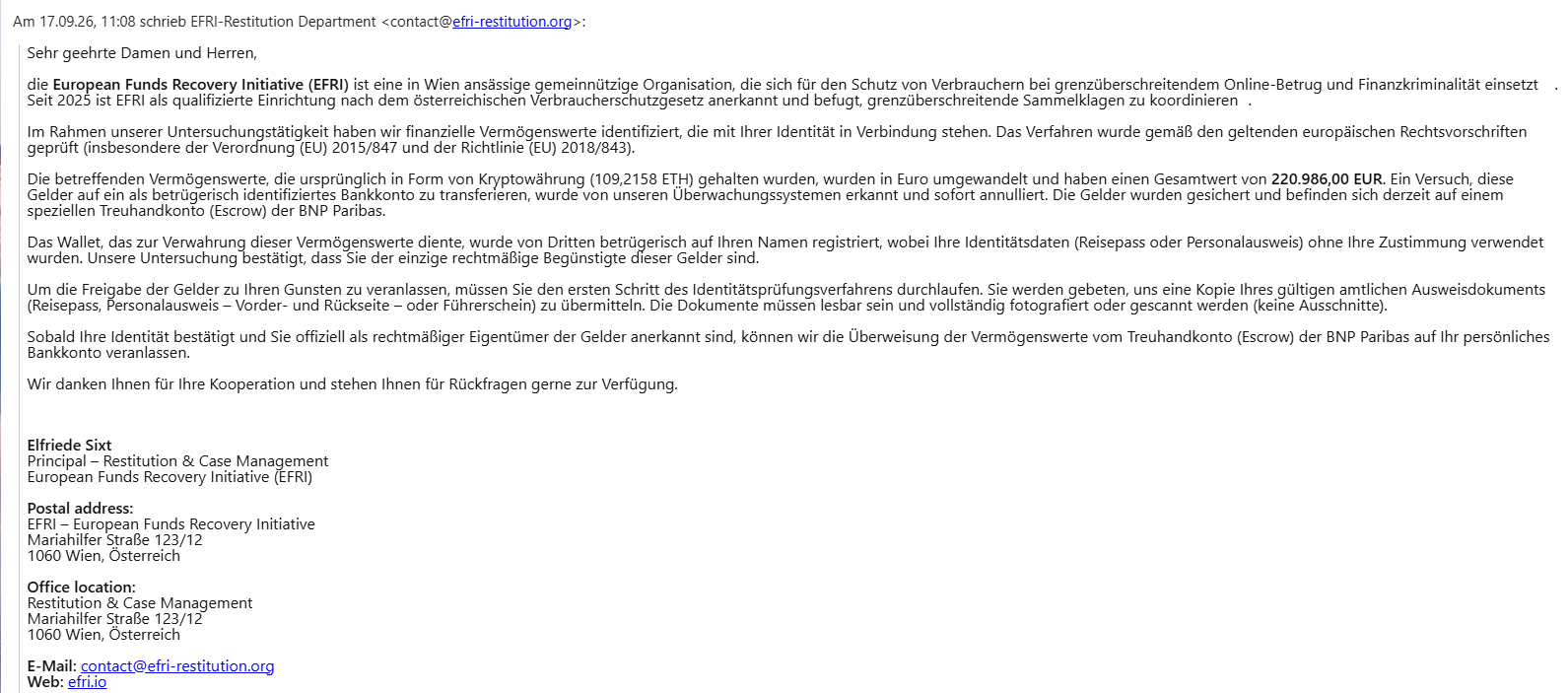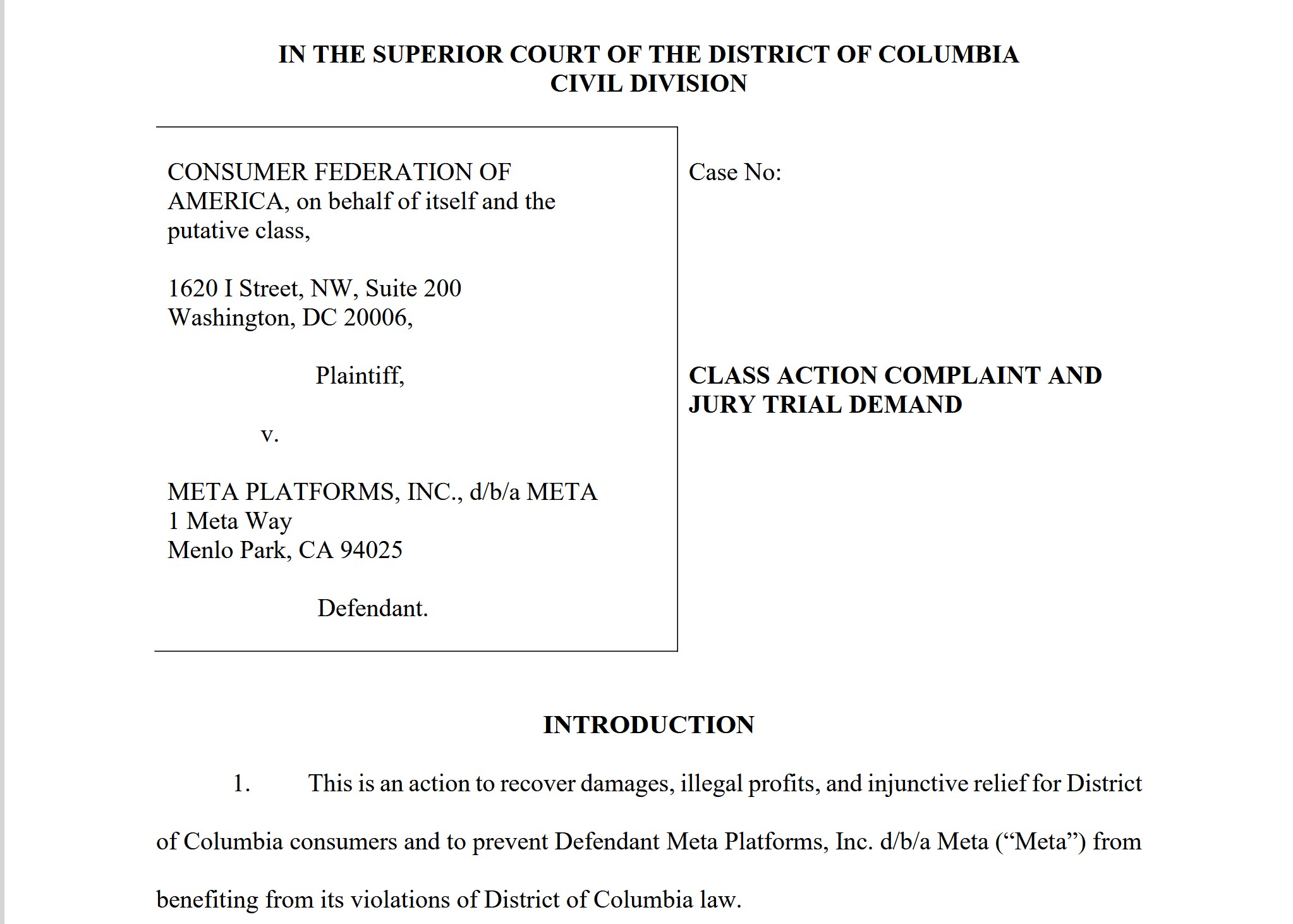
A new lawsuit against Meta deserves attention well beyond the world of social media moderation. On April 21, 2026, the Consumer Federation of America filed a class action complaint and jury trial demand in the Superior Court of the District of Columbia, alleging that Meta misled D.C. users about the steps it claimed to be taking to fight scam advertising on Facebook and Instagram. According to the complaint and CFA’s own public statement, the core allegation is not simply that scams existed on the platform, but that Meta presented itself as meaningfully protecting users while scam advertisements allegedly continued to proliferate.
That distinction matters. The lawsuit is not framed as a claim that Meta directly operated the scams. It is framed around the proposition that Meta’s public representations about fraud prevention and scam ad enforcement did not match the reality users were facing. Reuters, summarizing the filing, reported that the complaint accuses Meta of prioritizing ad revenue over user safety and of misleading users about its anti-scam efforts. Meta, for its part, has denied the allegations and says the complaint misrepresents its work to combat scams.
This Is Not Just a Content Moderation Story
It would be a mistake to treat this as just another dispute about content moderation. The more important issue is structural. Fraud at scale rarely begins with a bank transfer. It usually begins earlier, with attention capture, trust building, and low-friction entry points that make a victim engage in the first place. Scam advertising often performs exactly that function.
That is why this case matters beyond Meta. In many online investment and consumer scam models, the first stage is not the theft itself but the acquisition of the victim. A convincing ad, placed in a familiar online environment, creates the opening. Once the victim clicks, registers, or responds, the fraud system can move to the next phase. The platform is therefore not necessarily the place where the fraud is completed, but it may be the place where it begins.
Large-scale fraud is rarely the work of a single visible actor. It depends on multiple layers of infrastructure operating at the same time.
The Real Question Is About Fraud Infrastructure
The significance of the CFA case becomes much clearer when fraud is viewed as a system rather than as a series of isolated bad acts. Large-scale scams generally require a functioning intake mechanism, a method for initial payments, and a way to keep money moving after scrutiny, complaints, or operational breakdowns arise. Different actors handle different parts of that chain.
The Meta case concerns the intake layer. Payment processors and banks usually appear later. But that does not make the advertising layer secondary. It makes it foundational. Without a steady inflow of new victims, many fraud systems would collapse much earlier. The legal relevance of the Meta case therefore lies in the question whether a platform that publicly claims to be protecting users from scams can still be treated as merely incidental when scam advertisements allegedly continue to reach and influence users on a large scale.
Why the Complaint’s Focus on Meta’s Own Statements Is So Important
One of the most significant features of the lawsuit is its legal angle. Instead of trying first to prove that Meta directly operated scam schemes, the complaint focuses on Meta’s own public-facing representations about safety, scam prevention, and enforcement. The complaint itself says Meta misled users about the scope of scam advertising and about the profits it earns from scam advertising on its platforms. That is an important shift in emphasis.
This matters because a case framed around misleading representations about internal controls can be easier to litigate than a broader case about full operational participation in fraud. If a company tells users it is aggressively tackling scam content, and the real-world picture looks materially different, the contradiction itself becomes relevant. In that sense, the Meta litigation is not only about fraudulent ads. It is about whether public claims about anti-fraud controls matched reality.
Why This Matters for Victims
Victims rarely see the full fraud structure. They see the advertisement, the website, the message, or the supposed offer. They do not see the internal tolerances, the risk systems, the monetization logic, the account relationships, or the settlement paths in the background. That is one reason fraud systems are so difficult to challenge. Responsibility is fragmented across layers that ordinary users cannot observe.
The Meta case matters because it targets one of those hidden layers directly. It asks whether the platform that introduced the victim into the system also helped create a false sense of protection. That is not a minor issue. In many fraud patterns, the first point of contact determines whether the rest of the system ever gets a chance to operate.
A Broader Legal Shift Is Emerging
This lawsuit also reflects a broader legal development. For a long time, enforcement and litigation focused mainly on the direct perpetrators. That remains necessary, but it is no longer enough. More and more cases are now asking a harder question: which institutions made the system workable, profitable, and durable?
That question does not mean every intermediary is automatically liable. It does mean that courts are increasingly being asked to examine how fraud systems actually function in practice. The complaint against Meta fits into that shift. It places the platform’s role at the beginning of the chain under scrutiny.
Why EFRI Thinks This Case Is Bigger Than Meta
At EFRI, we have long argued, including in our work on the role of Payvision and ING in large-scale online investment fraud, that fraud should not be analyzed only at the level of the visible scammer. The more difficult and more important task is to identify the infrastructure that allows industrial-scale fraud to operate over time. Our research has focused precisely on that question: how payment channels, merchant structures, settlement arrangements, and institutional actors can become part of the operational framework that keeps a fraud system functioning even when warnings, chargebacks, account closures, and regulatory concerns accumulate. The Meta case matters because it highlights the first layer of that infrastructure: the mechanism through which victims are brought into the system.
If courts are prepared to examine the entry point seriously, the implications could extend far beyond one company or one lawsuit. The issue is not only who participated in the fraud. The issue is which structures allowed the fraud system to start and to keep functioning.
The Outcome Is Uncertain, but the Direction Is Clear
Meta disputes the allegations. The case has only just begun, and no court has yet ruled on the merits. But even at this stage, the lawsuit matters. It puts a critical issue into the open: whether a major digital platform can publicly present itself as protecting users from scam advertising while allegedly continuing to profit from the very mechanism through which many scams begin.
That is why this is not merely a social media case. It is an infrastructure case. And infrastructure cases are increasingly where the real accountability battles are heading.