EFRI Briefing · Memorandum of Understanding between YeePay and Banking Circle S.A. (Luxembourg), signed at the Singapore FinTech Festival 2026; first announced by Banking Circle on 18 November and distributed by YeePay on 20 November 2026 · This briefing reports regulatory decisions and published journalism; it makes no finding of wrongdoing by Banking Circle or YeePay.
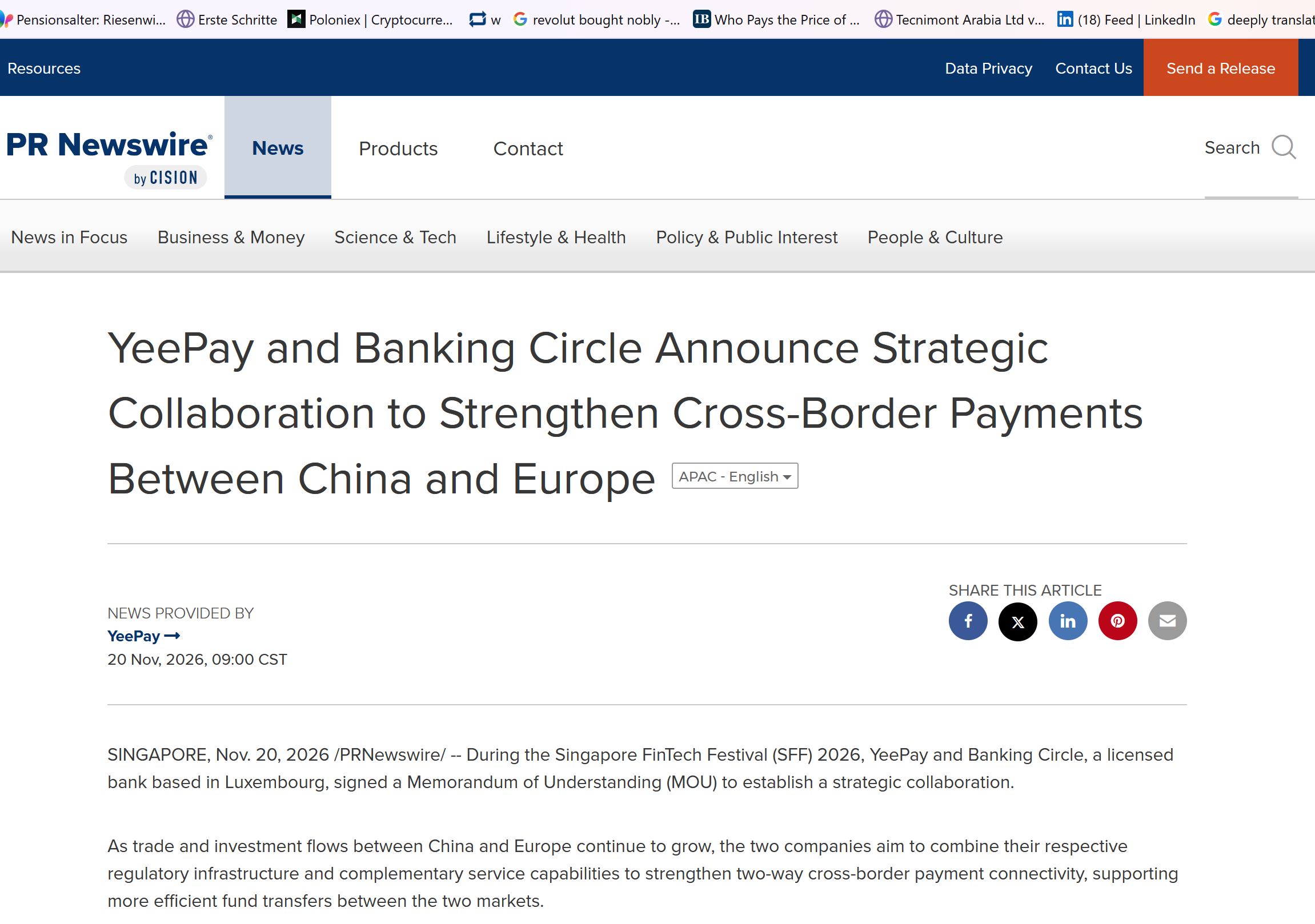
On 18 November 2026, Banking Circle S.A., a Luxembourg bank supervised by the Commission de Surveillance du Secteur Financier (CSSF), announced a Memorandum of Understanding with the Chinese payment group YeePay, signed during the Singapore FinTech Festival 2026. YeePay distributed its announcement on 20 November 2026. The stated aim is two-way payment connectivity between China and Europe: YeePay’s network in China on one side, Banking Circle’s European clearing and regulatory infrastructure on the other. The announcement describes YeePay as serving more than 6.5 million business clients, with a network covering more than 200 countries and regions and more than 100 currencies. Kirit Bhatia, Chief Digital Assets Officer at Banking Circle, said YeePay’s infrastructure in China “complements Banking Circle’s local clearing capabilities in Europe”. The parties state that they will refine the proposed solutions and advance technical integration “with compliance remaining a central priority”.
The proposed partnership is intended to connect a European infrastructure bank whose business model is serving other payment providers with a payment institution whose regulatory record in China concerns precisely the controls that decide whether fraud proceeds can enter a payment system: merchant identification, customer due diligence, suspicious-transaction reporting and cross-border transfers. This briefing sets out that record, its limits, and the questions it raises for the European side.
A second European bank on the same day
Banking Circle is not YeePay’s first European banking partner. ClearBank published its announcement on 18 November 2026; YeePay distributed the corresponding release on 20 November. The further MoU marks “the next phase” of an existing relationship. According to that announcement, ClearBank already provides the banking infrastructure supporting YeePay’s operations in the UK and Europe, including local collections and payouts, safeguarding, virtual IBANs and access to domestic and European payment rails. ClearBank also expressly includes the onboarding of YeePay’s regulated Hong Kong entity, with services supplied through the relevant ClearBank entities under their respective permissions and service arrangements. When the partnership was first announced in April 2026, ClearBank stated that it would enable YeePay to issue named local virtual IBANs to its merchant customers and would onboard existing regulated entities within the YeePay group ahead of full licence approval. YeePay’s UK subsidiary has since obtained an electronic money institution licence from the Financial Conduct Authority (August 2026), and the group has reportedly received an EMI licence from De Nederlandsche Bank. YeePay has been reported as processing more than USD 720 billion a year.
YeePay’s European footprint is therefore not an occasional correspondent link. It is a growing, licensed presence built on European banks’ infrastructure.
The announcements establish two distinct banking partnerships involving YeePay. They do not, by themselves, establish a direct account or payment-processing relationship between ClearBank and Banking Circle, or a single operational chain involving both banks. The contracting YeePay and bank entities, services and responsibilities must be identified separately for each arrangement; an MoU is not evidence that the proposed Banking Circle corridor is already live.
The regulatory record
YeePay was founded in 2003, received a payment licence from the People’s Bank of China (PBoC) in 2011 and is one of China’s established third-party payment institutions. The following are selected publicly reported sanctions and measures, drawn from the Chinese financial press and, for the SAFE decision, the official enforcement register:
| Date | Authority | Measure | Reported grounds |
|---|---|---|---|
| March 2014 (effective 1 April 2014) | PBoC | Nationwide suspension of onboarding new merchants, imposed on eight payment institutions including YeePay (NBD via ITBear) | Irregularities in the card-acquiring market |
| 10 September 2014 | PBoC | Order to exit existing card-acquiring business in certain provinces and municipalities (alongside ChinaPnR, Fuiou and Suixingfu) (same source) | Irregularities in card acquiring; contemporary reports cite widespread merchant miscoding |
| August 2016 | PBoC Business Management Department (Beijing) | Confiscation of RMB 10.592 million in illegal gains and a fine of four times that amount: RMB 52.961 million in total (36Kr) | Breach of clearing-management rules; reported link to unlicensed “secondary clearing” agents withholding merchant settlements. At the time, the largest penalty imposed on a Chinese third-party payment institution. Licence renewed in 2016 with a reduced card-acquiring scope |
| 26 February 2019 | PBoC Business Management Department | Confiscation and fine totalling RMB 9.4243 million; responsible individual fined RMB 100,000 (Phoenix Finance) | Breach of clearing-management rules and of the rules for non-financial payment institutions |
| July 2021 (published 16 July 2021) | PBoC Business Management Department | Fine of RMB 2.911 million; the then general manager, who also chaired the AML leading group, fined RMB 81,400 personally (Lanjinger) | Failure to perform customer-identification obligations and failure to file suspicious-transaction reports |
| 29 December 2021 (publicly reported in January 2022) | State Administration of Foreign Exchange (SAFE), Beijing | Fine of RMB 4.1073 million (RMB 4,107,300) under Article 39 of the Foreign Exchange Administration Regulations (SAFE decision 京汇罚〔2021〕18号; China.com.cn via Sina) | Article 39 covers transferring domestic foreign exchange abroad in breach of the rules. YeePay stated that the conduct dated from 2017 and had been remediated |
Two features of this record matter for a counterparty assessment. First, the 2021 sanction goes to the core of anti-money-laundering control: who is admitted to the payment system, and whether abnormal activity is reported once they are in. Chinese press reports identify the individually sanctioned manager as YeePay’s founder and actual controller, so responsibility for the AML failure was attributed at the top of the company. Second, the SAFE sanction concerns cross-border transfers, the very function the Banking Circle memorandum is designed to expand.
The SAFE decision dates from December 2021 and was publicly reported in January 2022; YeePay attributed the underlying FX conduct to 2017. This selection is not a complete enforcement history through November 2026 and does not establish that no later measures exist. YeePay retained its licence throughout, and its international licences were granted after this record was public. Historical sanctions do not, without evidence about subsequent remediation and current controls, establish continuing deficiencies.
Gambling and investment-fraud payment chains: what was reported
YeePay’s name also appears in investigative reporting on illicit payment chains. These are journalistic and police findings, not regulatory determinations against YeePay.
- Offshore betting, 2008. In June 2008, during the European Football Championship, the Economic Observer (reporter Zhang Xiaohui) traced how payments from Chinese bettors reached offshore bookmakers via domestic third-party payment gateways. It identified YeePay as the payment platform on the betting site yishengbo.com, alongside other payment providers on other sites. The paper later summarised the mechanism: offshore gambling operators registered domestic entities as ordinary merchants with payment platforms.
- Police case, 2010. A July 2010 CCTV Economic Half Hour programme reported that, in a gambling case investigated in Jiangsu in April 2010, suspects used YeePay and ChinaPnR, among others, to settle gambling funds; more than 50,000 people withdrew over RMB 130 million within two months. In a separate case, a suspect named YeePay among nearly ten domestic payment platforms used by an offshore gambling operator.
- Investment platforms, 2019. In December 2019, NetEase’s Qingliu investigative team reported that, posing as an investment platform, its reporters were told by a YeePay sales representative that YeePay could provide already-registered merchant accounts in other names to channel the platform’s funds (republished by mpaypass.com.cn).
- Whale App, 2026. On 12 November 2026, Beijing Business Today (Meng Fanxia, Zhou Yili) reported that transaction records linked to the collapsed “Whale” savings app ran through settlement entities whose payment institutions included Kuaiqian, Allinpay, Fuiou and YeePay. The Haicang branch of the Xiamen Public Security Bureau has opened an investigation into suspected illegal absorption of public deposits. YeePay told the paper that it had removed the platform and terminated the relationship long before. Fuiou said it could not verify the reported flows; the other institutions did not respond.
As usual the payment institution contracts with a merchant or settlement entity, while the economic activity the payer is actually funding: a betting site, a trading platform, a deposit scheme sits behind it. YeePay’s response in the Whale case shows that relationships are terminated; it does not show when the activity was first detected, how much passed through before termination, or whether it was reported.
Why gambling history matters in 2026
On 5 November 2026, the Financial Action Task Force published Combating End-to-End Illicit Financial Flows Linked to Scam Compounds. FATF finds that the development of many large scam compounds in Southeast Asia was “closely linked to online-gambling ecosystems”, and describes casinos, illegal online casinos and virtual-asset exchange services as components of underground banking and money-laundering infrastructure in the region (Section 5). On 9 September 2026, FATF’s Risks of Gaming and Gambling identified illegal gambling as one of the sector’s most significant risks and flagged the payment methods used by unlicensed and offshore platforms.
These reports are relevant for a risk assessment: a counterparty’s documented historical exposure to offshore-gambling payment structures now sits within a typology that FATF connects directly to the industrial fraud targeting European consumers. The typology does not establish that YeePay or either European banking partner is involved in current scam-compound activity.
The European side: nested risk
Banking Circle’s model is to provide accounts, clearing and virtual IBANs to payment institutions and fintechs, which in turn serve their own customers. In such structures the chain typically runs: European bank → payment institution → merchant or sub-merchant → platform → payer. The bank’s direct customer is the payment institution. Its view of the merchant, and of the payer at the end of the chain, depends on the data the payment institution chooses or is required to pass on.
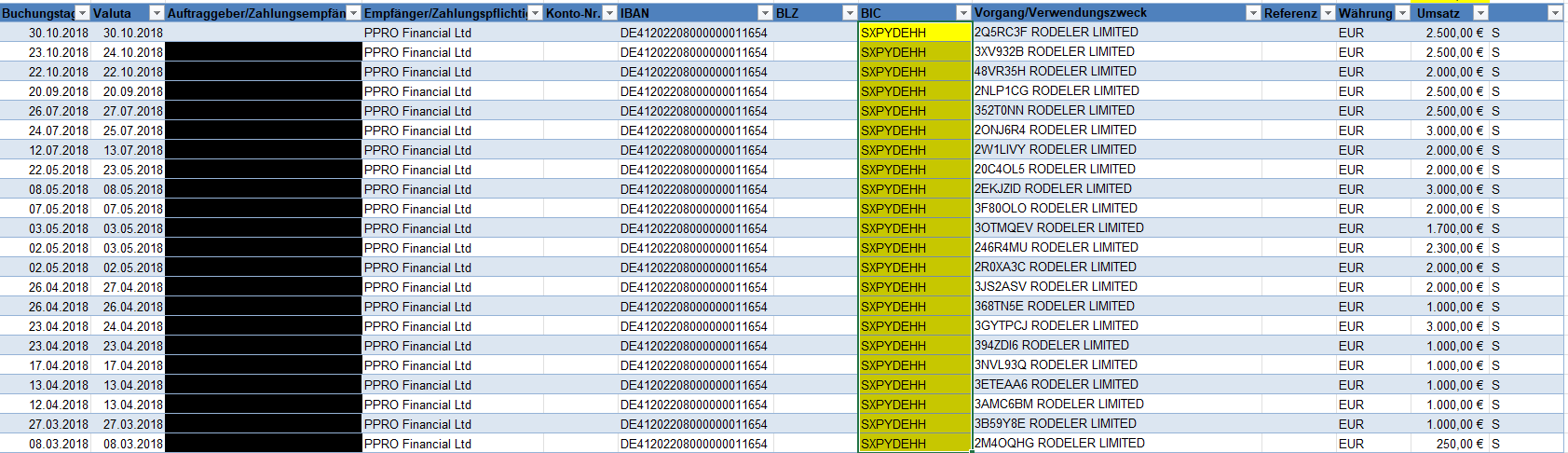
EFRI’s own case files illustrate the consequence. In a 2026 file concerning a German investment-fraud victim, funds were forwarded from an EMI account to accounts held in a shell company’s name at Banking Circle, and a virtual IBAN at Banking Circle had been opened in the victim’s own name through a partner platform. According to the correspondence in that EFRI file, Banking Circle told the victim’s representative in July 2026 that it held no IP, device or endpoint data on the underlying customers of its clients. This case-specific account does not establish the data arrangements across all Banking Circle client relationships; the original correspondence remains the relevant source for its scope. In 2025, OCCRP’s “Scam Empire” investigation reported that Banking Circle virtual IBANs, provided via an undisclosed payment service provider, received victim funds from fraudulent trading platforms.
Once a payment institution with millions of merchant relationships is connected, the effectiveness of the bank’s controls depends in part on that institution’s onboarding and monitoring, the very functions covered by YeePay’s 2021 sanction. The bank’s own information rights, verification and monitoring arrangements therefore also require examination.
The licensing answer, and its limits
Licensing is relevant, but it does not by itself determine the due-diligence regime for a particular banking relationship. Article 19 of Directive (EU) 2015/849 addresses qualifying cross-border correspondent relationships involving payment execution with a third-country respondent institution; the definition in Article 3(8), the actual services and the contracting entities matter. Establishment in China, Hong Kong or the United Kingdom is not, by itself, enough to satisfy every condition. An EU-authorised Dutch EMI falls outside Article 19’s third-country limb, while remaining subject to general and risk-based AML/CFT requirements, including enhanced diligence where required by Article 18.
For Banking Circle, the Luxembourg implementation must also be examined. Article 3-2(3) of Luxembourg’s Law of 12 November 2004 is framed more broadly: it covers cross-border correspondent or similar relationships with respondent institutions without reproducing Article 19’s third-country limitation. A Dutch counterparty therefore does not, on its own, exclude the national correspondent due-diligence requirements. These include examining the respondent’s business, reputation, supervision and regulatory history, assessing AML/CFT controls, obtaining senior-management approval and documenting responsibilities.
For payable-through accounts, Article 19(e) and Luxembourg Article 3-2(3)(e) additionally require assurance about identification and ongoing diligence of customers with direct account access, and the respondent’s ability to supply relevant customer due-diligence data on request. A virtual IBAN is not automatically a payable-through account; the actual access and account structure must be established. Article 36 of Regulation (EU) 2024/1624 contains the corresponding third-country correspondent requirements for the future regime. Under Article 90, that Regulation generally applies from 10 July 2027; Article 36 is not yet the operative rule for this November 2026 assessment.
Questions Banking Circle should be able to answer
Against the applicable AML/CFT framework and the record above, the following questions should be answered for the actual relationship and the responsible legal entities:
- Did Banking Circle’s assessment of YeePay consider the 2016, 2019 and 2021 PBoC sanctions and the SAFE decision of 29 December 2021, publicly reported in January 2022, and what remediation evidence did it obtain?
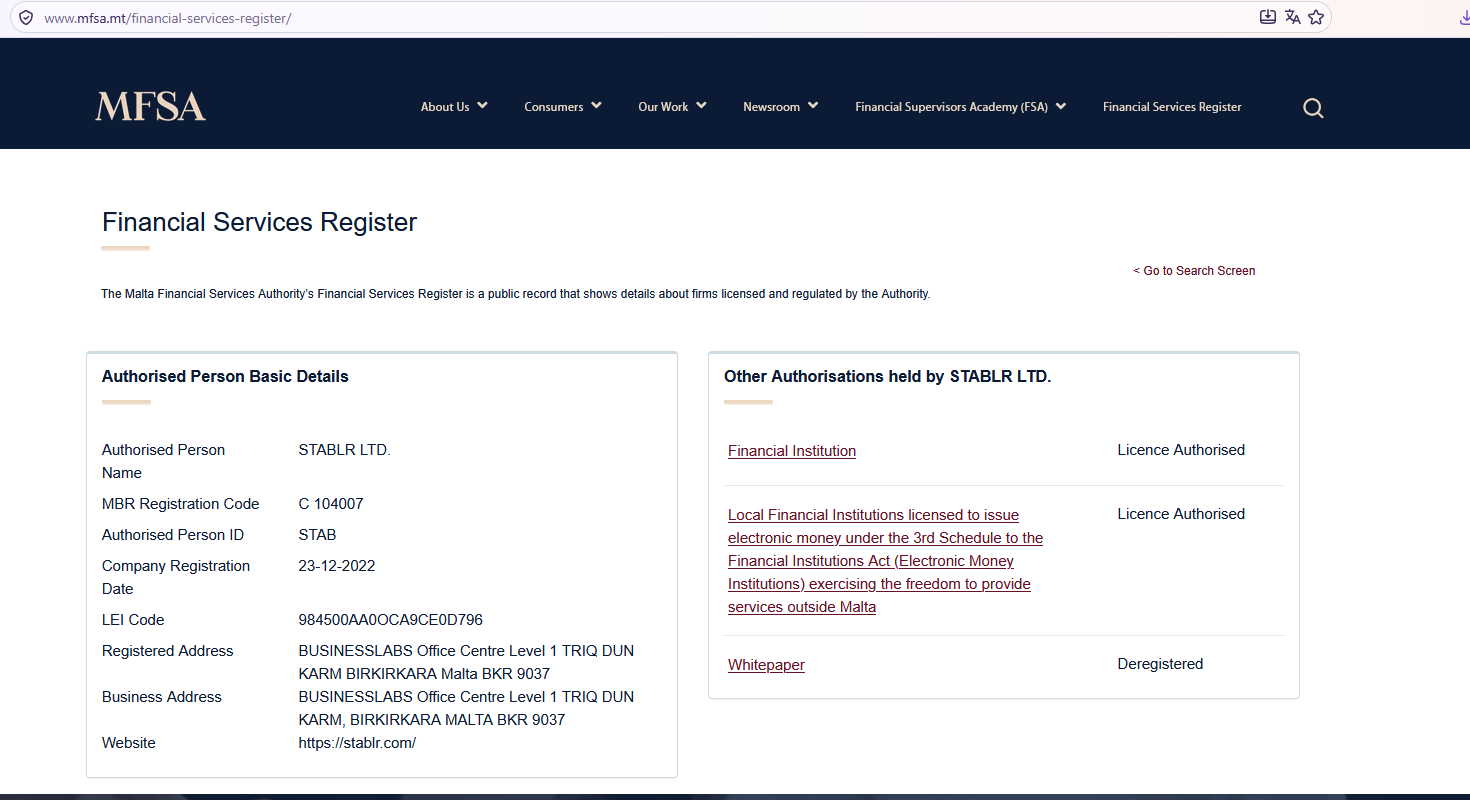
- Which YeePay entity will be the contractual counterparty: the Chinese parent, the Hong Kong entity, the UK EMI or the Dutch EMI? Which bank entity will provide each service, under which supervisor’s rules, and does the arrangement qualify as a correspondent or similar relationship?
- Will Banking Circle receive merchant-level and payer-level data for flows into Europe, or only YeePay’s aggregated instructions?
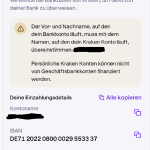
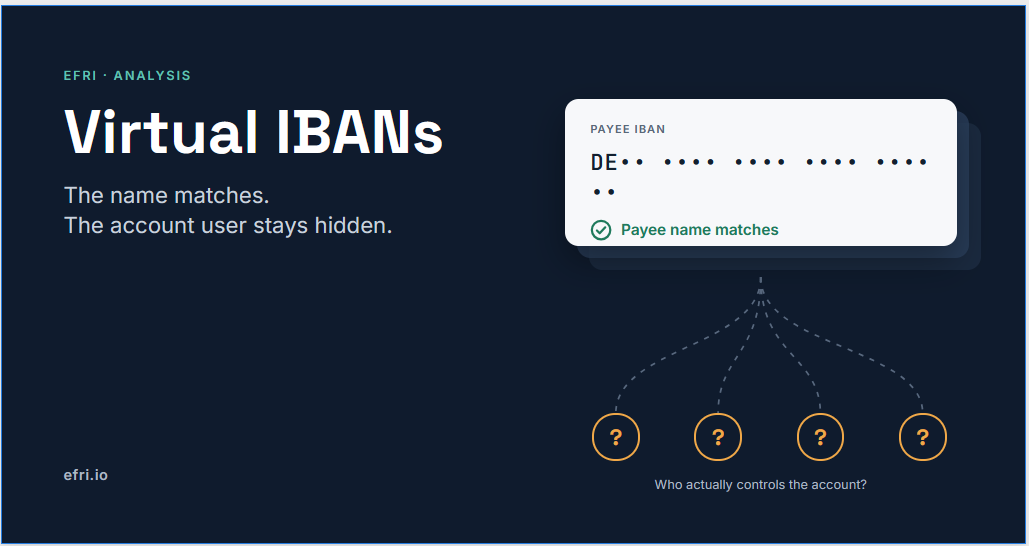
- Will virtual IBANs be issued to YeePay merchants, and if so, will the IBAN holder’s name match the beneficiary the payer believes they are paying?
- Will Banking Circle monitor at merchant level itself, or rely on YeePay’s monitoring?
- How will a European fraud victim’s recall request or a law-enforcement freezing request be routed through the chain, and in what time frame?
- What specific fraud warnings, victim complaints, recall requests, regulatory alerts or law-enforcement notices have reached, or would reach, each institution about a merchant, platform or beneficiary? How are their dates, related accounts and payment flows recorded, linked and escalated, and what triggers enhanced review, a lawful payment restriction or termination?
- Which underlying merchant, sub-merchant, beneficial-owner, beneficiary-name, transaction and, where lawfully available and necessary, IP, device or endpoint data can Banking Circle obtain from YeePay? Which information arrives with payments, which can be requested, how quickly is it supplied, and how is its completeness verified?
- How will fraud alerts, account and merchant identifiers, recall outcomes and termination decisions be exchanged between the institutions involved in an actual payment chain, on what legal basis and within what response times? Where YeePay uses both Banking Circle and ClearBank, how will relevant alerts be routed without assuming that the two banks have a direct operational relationship?
Our Assessment
In our view, this MoU is a test case for a problem EFRI encounters in almost every investment-fraud file: the European bank at the end of a payment chain is the only regulated, solvent and findable party, yet it sees the least. Each institution can point to the next one down as the party that onboarded the customer. When victims seek recovery, that fragmentation becomes a defence.
In our assessment, YeePay’s documented regulatory history raises questions about the scope and effectiveness of the due diligence a European bank performs before granting access to accounts, clearing and payment systems. Earlier customer-identification, merchant-oversight and reporting failures should inform the counterparty risk assessment, the remediation evidence sought and the monitoring arrangements. The due-diligence standard is set by Article 19 of Directive (EU) 2015/849, as transposed in Luxembourg by the Law of 12 November 2004, and, from 10 July 2027, by Article 36 of Regulation (EU) 2024/1624. The legal significance of that history depends on the bank’s own conduct and on the information available to it at the relevant time.
Tristan Kirchner’s remark that businesses need “trusted access to local banking infrastructure rather than increasingly complex chains of intermediaries” describes the problem accurately. Fragmentation of a payment chain should not shield an intermediary’s own conduct from scrutiny. Where warnings are repeated or sufficiently specific, the allocation of monitoring between institutions does not, by itself, answer whether each institution exercised the care required of it. We do not suggest that YeePay should be excluded from European payment systems, nor that the MoU is improper. But payment rails that connect a counterparty with this record to European accounts call for enhanced due diligence that can be demonstrated, not merely asserted, wherever the counterparty is licensed. “Compliance remaining a central priority” is a statement; victims need an architecture. Banking Circle and ClearBank should explain, before integration and throughout any operating relationship, how merchant-level transparency, monitoring and recall will work across the chain, and who bears the loss when they fail
As of 23 November 2026.