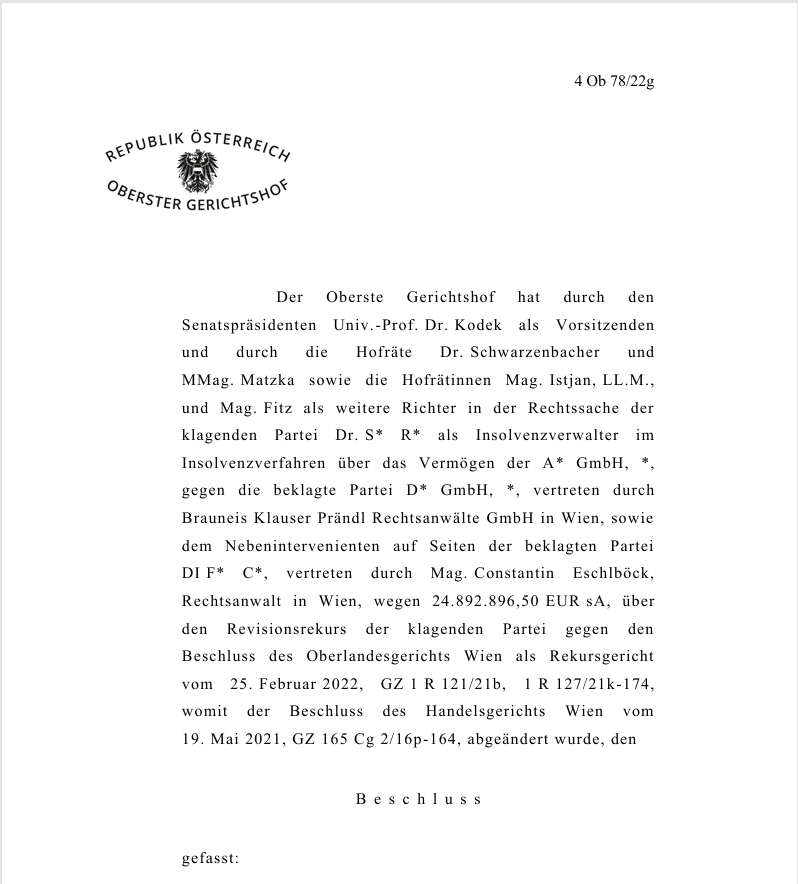
Online investment scams rarely begin with one large bank transfer. They usually start much earlier: with an online advertisement, a registration form, a small first deposit, a fake trading account, a dashboard showing apparent profits, repeated calls from an “account manager”, and a withdrawal process that becomes increasingly difficult.
For years, many legal discussions around online investment fraud have focused too narrowly on individual payments. Courts may ask whether one specific payment directly caused a later loss, whether a small initial credit-card payment was too minor to matter, or whether later bank transfers interrupted the causal chain.
That approach risks missing how online investment fraud actually works.
The European Union’s new rules on distance financial services are important because they recognise a central feature of digital consumer harm: consumers are not only influenced by the words in a contract or by one false statement. They can also be manipulated by the design of the entire digital decision journey.
EU Law Is Starting to Recognise Manipulative Digital Design in Finance
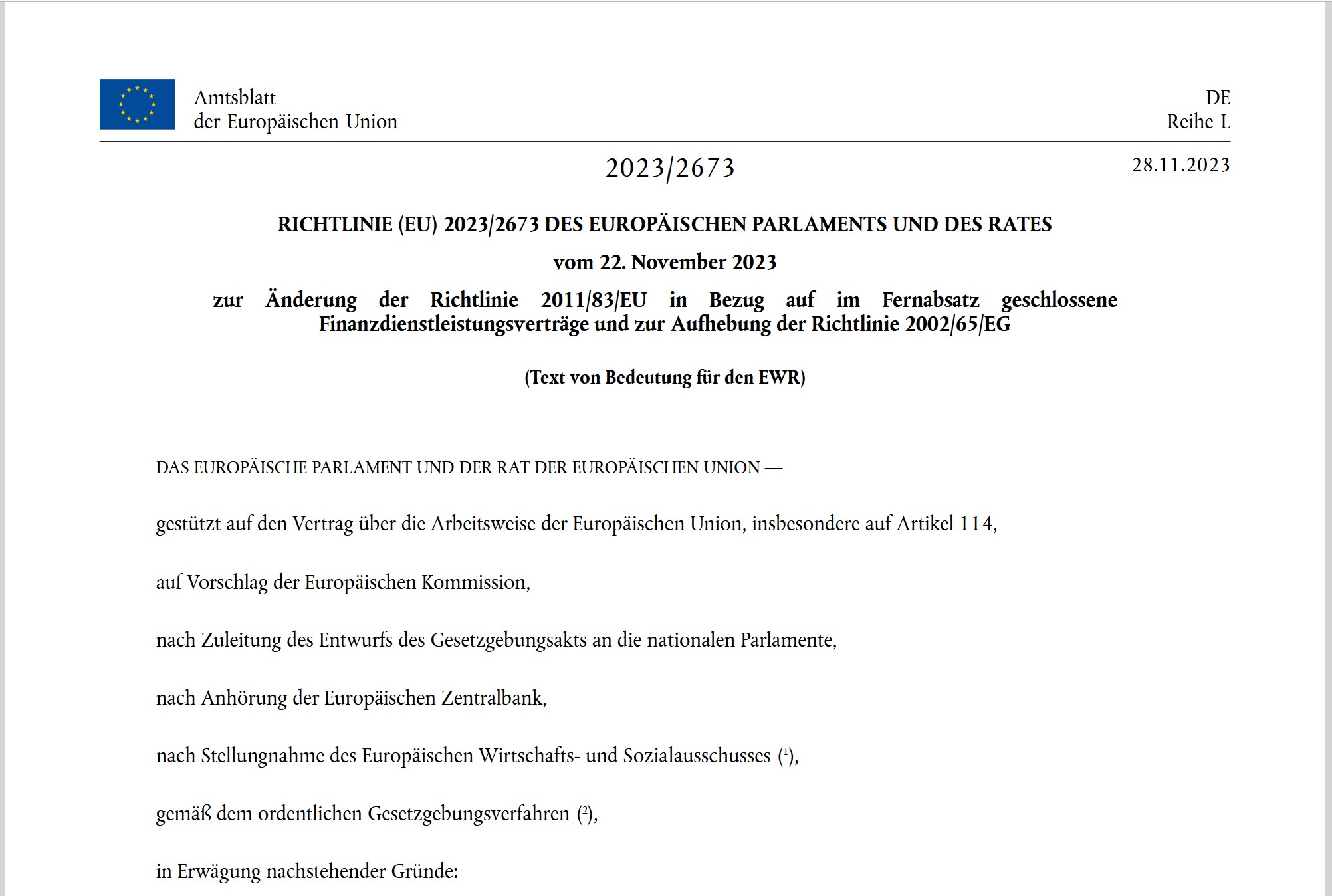
Directive (EU) 2023/2673 amends the Consumer Rights Directive 2011/83/EU and introduces updated rules for financial services contracts concluded at a distance. These are financial services sold online, by phone or through other remote channels. (Note: Directive (EU) 2023/2673 entered into force on 18 December 2023. Member States had to transpose it into national law by 19 December 2025, and the new rules apply from 19 June 2026.)
The reform is part of the EU’s attempt to adapt consumer financial protection to digital markets. It introduces, among other things, stronger pre-contractual information duties, the right to request human intervention where automated tools such as robo-advice or chatbots are used, an easier withdrawal function for distance contracts, and additional protection against so-called dark patterns.
This is not the first time EU law has addressed dark patterns. The Digital Services Act already prohibits online platforms from designing or operating interfaces in ways that deceive, manipulate, or materially impair users’ ability to make free and informed decisions (Art. 25 and Recital 67 DSA).
However, Directive (EU) 2023/2673 is particularly important for EFRI’s work because it brings the dark-pattern issue directly into the field of consumer financial services. That matters. Investment decisions are not ordinary online clicks. They involve money, risk, trust, financial vulnerability and significant information asymmetry.
What are Dark Patterns?
Dark patterns are manipulative digital design and user-journey techniques that influence, pressure or steer consumers into decisions they would not necessarily have taken if information, choices and exit options had been presented in a transparent, balanced and fair manner.
In online financial services and investment scams, dark patterns may include:
- artificial urgency, such as “last chance”, “limited offer” or “your position will be closed”;
- misleading buttons, such as “withdraw” buttons that lead to new payment demands;
- hidden or delayed risk information;
- simulated profits shown in fake dashboards;
- easy deposits but difficult withdrawals;
- repeated prompts after a consumer has already made a choice;
- aggressive follow-up by account managers;
- asymmetric click paths, where entering the system is simple but leaving it is difficult;
- fake compliance checks requiring further payments;
- alleged taxes, liquidity fees or verification payments before withdrawal.
In investment scam cases, these techniques are not peripheral. They are often part of the fraud architecture itself.
Online Investment Scams Are Built Around a Manipulated Journey
A typical online investment scam is not a single event. It is a staged process.
First, the consumer is attracted through advertising, search results, social media, a comparison website, an affiliate funnel or a fake news article. Then the consumer is pushed to register. After that, a small initial payment is requested. This first payment activates the account and changes the consumer’s status: the consumer is no longer merely a lead, but a paying customer.
From that point, the fraudsters can show apparent profits, refer to a supposed trading relationship, build trust through repeated contact, and escalate the pressure. The victim may then be encouraged to make larger payments by bank transfer. Later, when the victim tries to withdraw funds, the platform may demand further payments for taxes, fees, anti-money-laundering checks, liquidity releases or account verification.
This is why the first payment matters.
The first deposit is often not economically important because of its amount. It is important because of its function. It is the conversion point. It moves the consumer into the platform relationship. It activates the fake account. It allows the fraudsters to simulate legitimacy. It creates the basis for the next stage of extraction.
Why This Matters for Causation in Legal Discussions
Causation in investment scam litigation should not be analysed as if each payment occurred in isolation.
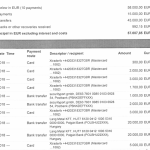
If a consumer first pays EUR 250 or EUR 500 by card and later transfers EUR 50,000 or EUR 100,000 by bank transfer, the key legal question should not be whether the first payment amount was large enough to “explain” the later loss.
The better question is:
Did the first payment activate a manipulated digital and communicative journey that foreseeably led to further payments?
That is where the EU’s recognition of dark patterns becomes important. It helps explain that digital financial harm can result from the architecture of the decision process itself: the interface, the fake account, the payment path, the follow-up communication, the displayed profits and the obstacles to withdrawal.
In other words, the later bank transfer may not be an independent new event. It may be the foreseeable continuation of the same manipulated journey that began with the first deposit.
The First Deposit as the Conversion Point
In many online investment scams, the first deposit is the operational threshold between marketing and extraction.
Before the first deposit, the consumer is a lead. After the first deposit, the consumer becomes a paying platform user. The fraudsters can then apply a different set of tactics: apparent trading activity, personal account management, psychological pressure, fake profits, staged withdrawals and higher-value investment requests.
This distinction is essential for causation.
If the first deposit is treated merely as a small technical payment, the legal analysis may miss its real role. It was not just a payment. It was an entry, activation and binding act within a wider fraud and extraction system.
This is why small first deposits should not be dismissed as legally insignificant. In online investment fraud, a small first deposit can be the gateway into the entire loss.
From False Statements to Manipulative Architecture
Traditional fraud analysis often focuses on false statements: Was the victim told something untrue? Was there a misrepresentation? Did the victim rely on it?
That remains important. But online investment scams go further. They often combine false statements with manipulative architecture.
The website suggests legitimacy.
The payment page makes the first deposit easy.
The fake dashboard shows profits.
The account manager creates trust.
The withdrawal button does not lead to withdrawal.
The exit path creates new payment demands.
The consumer is kept inside the system.
This is the reality that the dark-pattern discussion helps describe.
The harm is not caused only by one lie. It is caused by the structured interaction between design, communication, payment infrastructure and psychological pressure.
Why Infrastructure Providers Matter
Dark-pattern analysis also raises difficult questions about infrastructure providers.
An acquiring bank, payment service provider, card processor, white-label platform provider, CRM provider or other technical intermediary may not directly speak to the victim. But if its services enable the first payment, account activation, recurring processing, refunds, test withdrawals or settlement flows, its role may become relevant to the wider causal chain.
The issue is not whether the infrastructure provider personally designed every scam page or made every false statement. The issue is whether it materially enabled or maintained the operational architecture through which victims were converted, reassured and induced to pay further amounts.
For payment service providers, this becomes especially relevant where red flags were visible: high chargeback rates, fraud reports, regulatory warnings, suspicious merchant structures, false merchant categories, shell companies, unusual settlement flows or repeated complaints.
If such an intermediary continues to support the payment structure despite these signals, the legal question becomes sharper:
Did the intermediary merely process an isolated payment, or did it help maintain the payment architecture that allowed the fraud system to continue? (compare our Payvision report for how payment rails can become fraud infrastructure).
Online investment scams should not be analysed only as a series of false statements. They should be analysed as structured autonomy violations: deception creates the false investment reality, manipulation steers the consumer into the first deposit and further payments, and impairment obstructs withdrawal or exit. This is directly relevant to causation, because the victim’s loss is produced by the cumulative effect of the manipulated journey, not by one isolated click or payment.
Why the EU’s New Rules Matter for Future Cases
Directive (EU) 2023/2673 will not automatically decide past investment scam cases and is not retroactively applicable to older loss events. However, it is relevant as regulatory confirmation that digital financial harm can be produced by manipulated user journeys, not only by isolated false statements.”
It supports the view that courts should not assess causation by looking only at the final bank transfer or the amount of the first card payment. They should examine the full sequence: advertisement, registration, first deposit, account activation, fake dashboard, follow-up calls, apparent profits, withdrawal barriers and further payment demands.
This approach reflects how investment scams actually operate.
The Legal Shift: From Transaction to Journey
The key shift is from transaction-based analysis to journey-based analysis.
A transaction-based analysis asks:
Did this specific payment directly cause this specific loss?
A journey-based analysis asks:
Was the victim moved through a manipulated financial journey that made the later loss a foreseeable consequence of the earlier entry point?
For online investment scams, the second question is often the more accurate one.
It captures the reality that the first deposit, the platform account, the apparent profits and the later bank transfers are not separate worlds. They are stages of one integrated process.
Conclusion
The EU’s new rules on distance financial services are significant because they recognise that digital financial harm can arise not only from false information, but from the design of the consumer journey itself.
For victims of online investment fraud, this is critical.
A small first deposit may not be legally insignificant. It may be the point at which the victim is converted into a paying customer, drawn into a fake investment relationship and exposed to foreseeable further extraction.
Future courts should therefore analyse online investment fraud not as a set of isolated payments, but as a structured manipulation process.
The question is not only what the victim paid.
The question is how the victim was led there.